


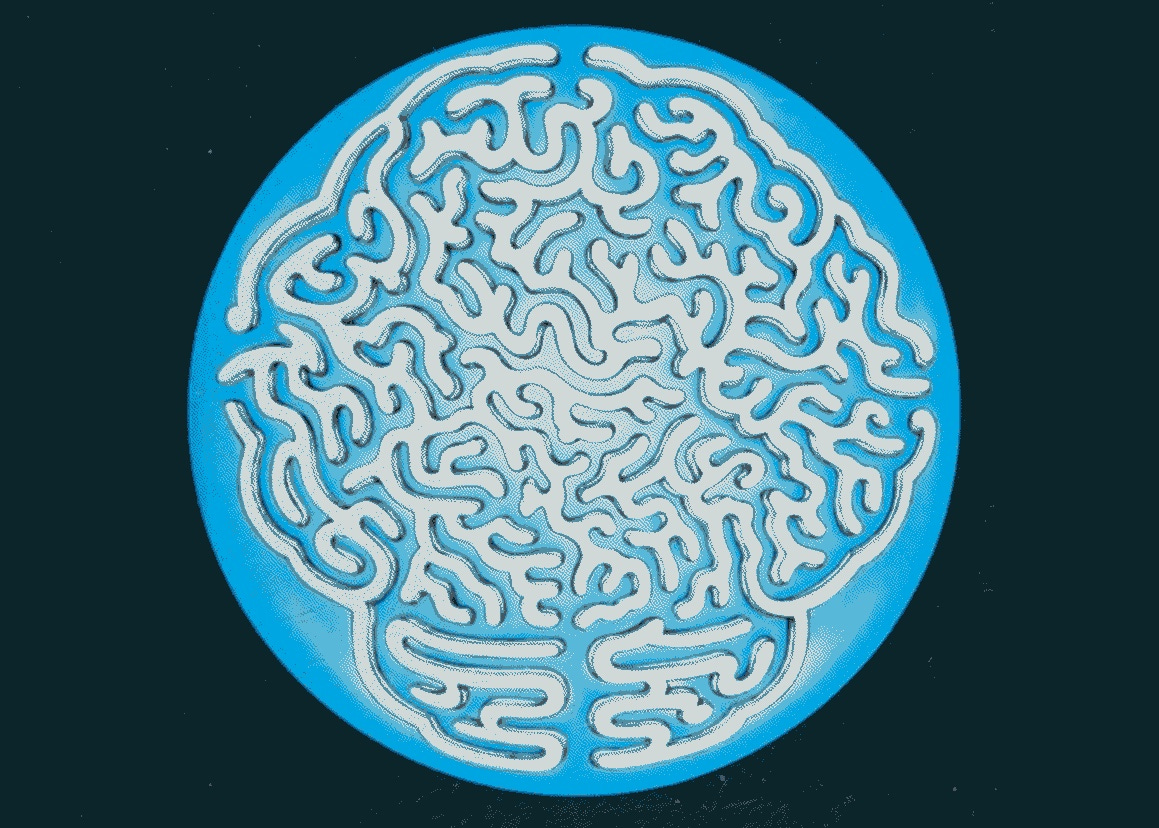
First of all, I’m thrilled to share that my latest feature for WIRED, about the brave new world of biological computers, is the magazine’s August cover story. This one was a doozy to report; I visited clean rooms and wet labs, played Pong against some brain cells, and talked with bioethicists, neuroscientists, computer scientists, and one fantastically ornery sociologist about where consciousness begins and ends. It changed how I think about life, intelligence, and computing. Read it here!
The piece has already inspired some—let’s say—spirited discussion online. To be fair, the idea of human neural tissue powering an AI system has a strong dystopian flavor, but brain organoids, the underlying technology, have been a staple of neuroscience labs for over a decade. As is often the case with biology, the research is way ahead of public awareness. This is what drew me to science writing in the first place: a desire to reduce some of the latency between scientists and the rest of us.

In a feature like this, so much material ends up on the cutting room floor (for which I must credit my funny, generous, incisive editor at WIRED, Jason Kehe), so I thought I’d share a little behind-the-scenes reporting from my neural adventure below.
It’s January, and I’m sitting on a bench on the campus of Johns Hopkins University, watching a robin triumphantly yank a worm from the balding lawn of the quad. Students aren’t back from the holiday break; the campus is eerily quiet and vents are issuing huge vape clouds of airy smoke from deep below the engineering building.
I’m here on a reporting trip, visiting labs across Johns Hopkins hospital and university to see some human brain organoids in action. Brain organoids are sesame-seed-sized globs of neural tissue, formed when human stem cells are cajoled into “differentiating” into neurons and then left to aggregate and cohere into free-floating spheres. Containing somewhere between a few hundred thousand and a few million neurons, brain organoids have, over the last decade, revolutionized pharmaceutical testing and opened new avenues for basic neuroscience research.
But that’s not what has brought me to Baltimore in the dead of winter. Instead, my curiosity was piqued by a buzzy initiative, spearheaded by Johns Hopkins researchers, to use brain organoids as building blocks in new “wetware” computer systems, creating living AI that interlinks biological and conventional computing components. According to these researchers, “Organoid Intelligence,” or OI, could circumvent AI’s fiendish energy demands by harnessing the onboard efficiency of biology. Living neural networks are adaptive, and they aren’t limited by the linear logic of a computer. They respond capably to electrical input. Could they be the future of computing.?
My first stop is the office of nanotechnologist David Gracias. Like all good scientist offices, it’s a complete mess. We sit at a low table hidden beneath loose sheets of printer paper, legos, and magnetic toys. A lanyard for the last AAAS meeting is draped over a takeout bag on the floor, identifying Gracias, who holds 36 U.S. Patents, as an “armchair astronaut.” He tells me about the nanoscale EEG caps he has invented, which wrap around the delicate spherical organoids to capture their neural activity. He shows me a microchip embedded with a special housing to keep an organoid alive. “I would like to think that this will be at the Smithsonian someday,” he says.
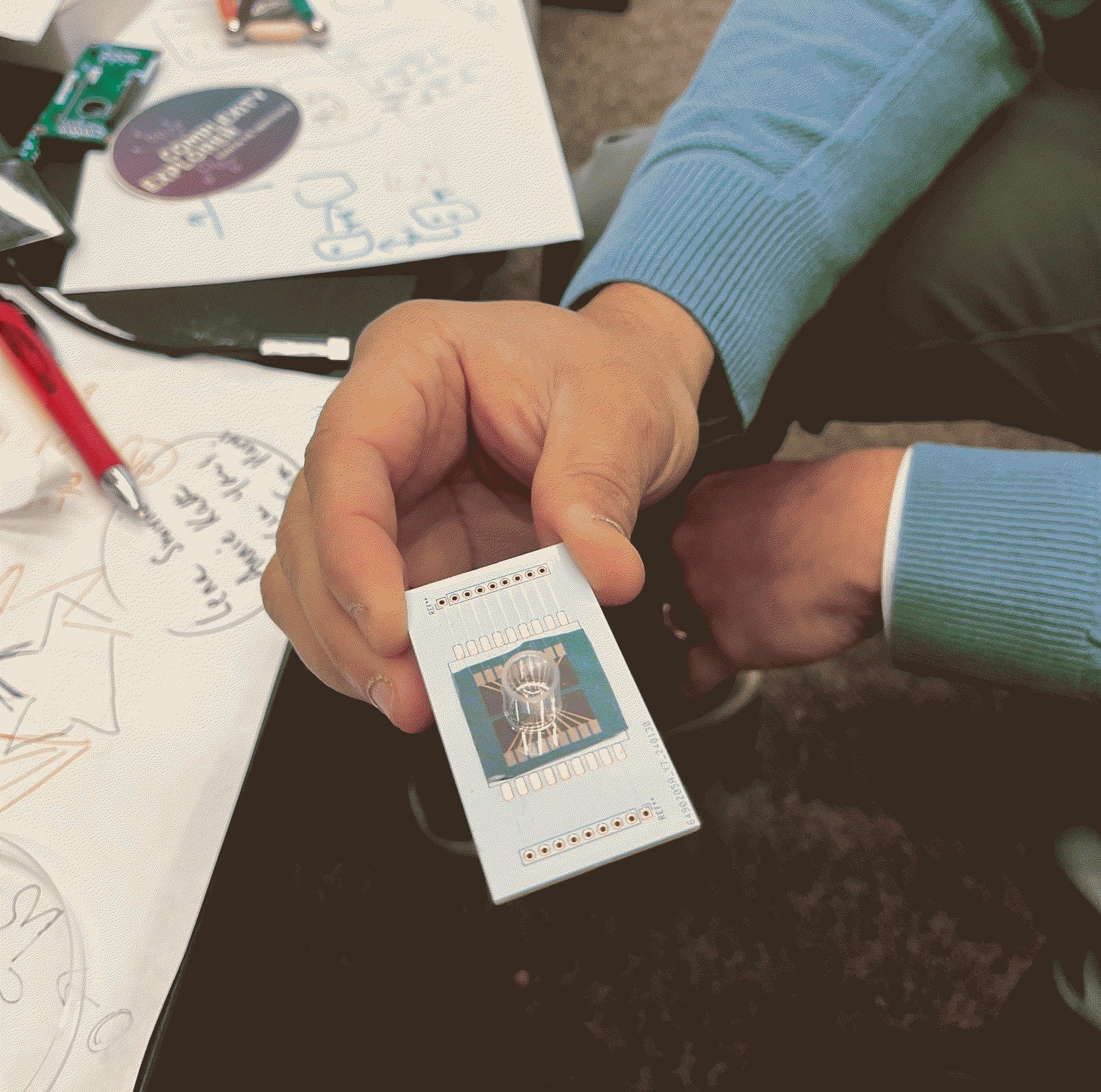
For Gracias, the dream is to capture as much of the electrical information emerging from each tiny organoid as possible, measuring the output of every neuron in order to eventually understand—and learn to mimic—the deep structure of the brain. He and his postdocs whirl me around their labs, showing off spidery robots, circuit boards, plasma etchers, micro-electrode arrays. They have their own clean room, which looks pretty grimy (in the intimacy of the little airlock separating it from the hall, Gracias tells me “clean” just means “free of dust”). After I turn off my recorder, he tells me he’s not so sure he’d like to find out that consciousness has a material basis in the brain.
“The mystery helps me,” he says. “If I find out I’m just a biological AI bot, I’ll be sad.”
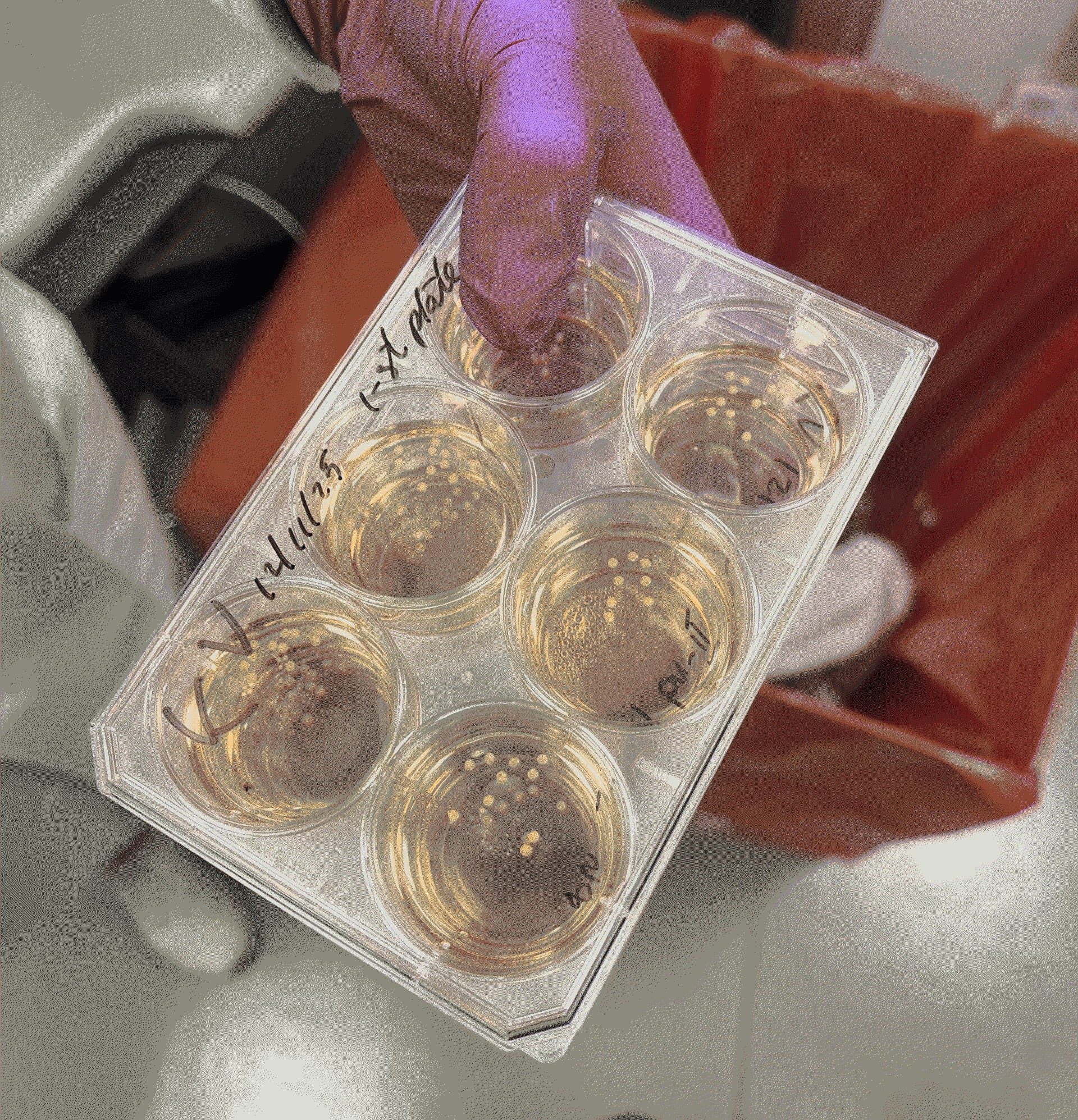
Later that afternoon, I head across town to visit the Center for Alternatives to Animal Testing at Johns Hopkins School of Public Health. In the CAAT lab, I get eyes on some real-live organoids for the first time. As a research associate pulls a tray of them from the incubator where they’re being jostled by a rotating pad, Dr. Thomas Hartung, the Center’s director, observes drily that “all cell culture labs in the world look the same.” He nods to the rotating pad, which wobbles the trays of organoids in a hula-hoop-like motion. “The only thing which is really special here is this shaker.”
Hartung is a toxicologist, and one of the leading proponents of the OI effort. He urges me to look closely at the organoids. The biggest are about the size of sesame seeds; the smallest are just barely visible. They bob in their pinkish liquid solution like drops of vinegar in olive oil, bumping up against each other. Hence the shaker. Hartung tells me neurons have to be constantly agitated or else they congeal like a “pan-fried egg.”
Neurons, I’m learning, want to be together. That is their cellular raison d’etre: to connect with each other, forging the synapses that conduct the brain’s electrical chattering. Even at a micro-scale, even in a laboratory far beyond the boundaries of the human being where their lives began, neurons carry on with the brain’s business, forging synapses and producing repetitive oscillations, or brainwaves.
“Mini-brains” is the obvious term for them, but it’s a contentious one. In several papers, leaders in the field have publicly admonished its use, calling it unnecessarily sensationalistic and misleading. Every researcher I spoke to for the WIRED piece was clear on this point: with only a few hundred thousand neurons, human brain organoids are not brains, and they’re a long way from developing consciousness. Many prefer the less evocative term “micro-physiological system,” or MPS. That being said, those same researchers almost all use the term “mini-brain” in casual conversation.
I mean, look at them:
The next day, I’m at Johns Hopkins Hospital, visiting Dr. Annie Kathuria, who is doing her part to nudge the mini-brains into more maximal realms. She recently made headlines for her Multi-Region Brain Organoid, or MRBO, which connects organoids representing different brain areas into a single structure, and is refining techniques to create vascular and endothelial structures to help circulate nutrients across them.
Dr. Kathuria is a consummate scientist, brisk and utterly unsentimental. Every day, she rises early to package batches of organoids for an 8AM courier service pickup. Sealed in sterile beakers and vacuumed tight into plastic lunch bags, her organoids travel across the country for pharmaceutical and toxicology tests. The farthest one of Kathuria’s organoids has traveled, for now, is Arizona, for a Department of Defense trial on toxic effects. “The DoD loves organoids,” she tells me, breezily.
Her lab is empty. For some reason, the Johns Hopkins School of Public Health has determined my presence a biohazard, and Kathuria’s postdocs have cleared out for the morning. “They’re the ones doing all the work,” she laughs. After spraying her purple nitrile gloves with ethanol, she pulls trays of organoids out from the incubator where they’ve been nesting over Christmas break. They’re young, still a bit unripe for experimental work. Under the 20x zoom of her microscope, I’m surprised at how different they look from one another. The vascular organoid is a scoop of cherry-red sherbet streaked with veiny structures. The endothelial organoid is a jaundiced beige egg, craggy at the edges and surrounded by a fine grit of dead cells. “Let me see if I can catch one for you,” she says, sweeping the tray of nutrient wells around under the lens. The organoids are loose, “cultured” in a nutrient goo biologists call “media.”
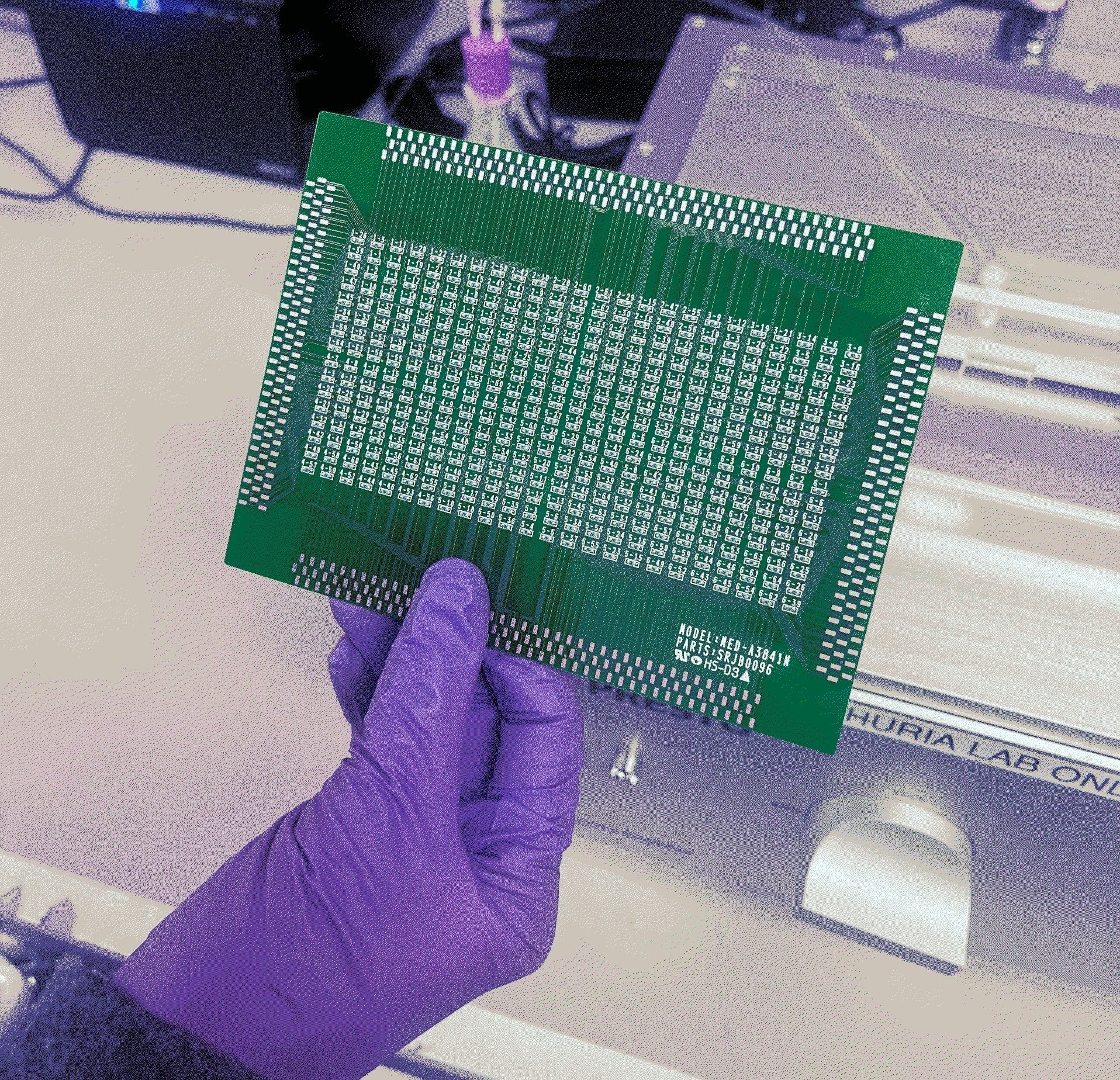
Every organoid researcher has their own moonshot scheme. For Hartung, it’s Organoid Intelligence, and a future where animal testing is radically minimized, if not made entirely irrelevant. For Gracias, it’s the ability to read and stimulate 10,000 neurons at once. For Kathuria, it’s a full-body organoid system, connecting each region of the brain, through the conduit of the spine, to miniaturized organoids representing every relevant bodily organ. That way, she explains, she could test the effects neuropsychiatric medications have on the whole body—not just the brain.
After leaving Kathuria’s lab, I take a long walk around Baltimore and end up at the Walters Museum, a public art museum in the historic center of the city. The first gallery I enter is dedicated to 17th century “Cabinets of Curiosity,” those heterogenous collections of exotic oddities so beloved by Dutch royals. I pore over inventories of famous collections, like The Ark, naturalist John Tradescant’s 17th century collection, which later became the Ashmolean Museum at Oxford.
The famous engraving on the Tradescant family tomb:
By their choice collections may appear
Of what is rare in land in sea and airWhilst they (as Homer’s Iliad in a nut)
A world of wonders in one closet shut
At the Walters, I wander through the wonders: blowgun darts from the South Pacific, 16th century Chiriqui figurines, narwhal horns and long-dead beetles. By sampling the most unusual and valuable exports from each outpost of their empire, Cabinets of Curiosity were a way for royals and moneyed merchants to succinctly represent their scope of influence. Standing under a pufferfish frozen in its spiny rictus, it occurs to me that this impulse never really left us. It just changed form.
In science, a model serves to make the unmanageable manageable—and, in a sense, to possess it. Looking at a meticulously-engraved wooden cabinet, its tiny, ivory-inlaid drawers tucked with jewels, fossils, rare insects, religious relics, and other valuable bits of imperial flotsam, I can’t help but think of Dr. Kathuria’s Multi-Brain Region Organoid. Just as the Cabinets contained empires, it summarizes the human mind on a chip: truly “Homer’s Iliad in a nut,” if there ever could be a living equivalent.
In other news, I write this newsletter two weeks into my time at Ucross, a glorious artist residency program in northern Wyoming. A précis of recent google searches:
“frog egg wyoming river”
“can rattlesnakes swim”
“baby gopher on the ground ok”
“antelope vs deer face”
“is hay horses food?”
I had a blast at FWB Fest earlier this month, where I spoke about my ongoing research into biological computing to a crowd so amped they practically vibrated. Taking advantage of the festival’s concentration of artist-technologist types, my friends and I shot some goofy “field reports.” The first dispatches are here and here.
I’ll be in Montreal at the end of the month, bringing my slime mold road show to the MUTEK Forum. This year, the theme is “Symbiotic Frequencies,” so I’ll be in good company. I’m speaking on the 27th. If you’re attending the festival, please say hello!
Finally, if you’re wondering what happens if you eat a brain organoid, I did ask.
Nothing, apparently.
xo
Claire
Actually, I should add, that while eating an organoid should pose no real risk, I was told it could potentially be extremely dangerous to handle an organoid made from your own cells. If it ends up back in your body by accident (say, through an open wound) it might go rogue and keep multiplying. We have a name for that: cancer!!
So cool