

Lessons from Slime
Softening hard edges with a little goo; worm memories; new work in print.

It’s hot. Here in Los Angeles, the overcast gloom of early June has cracked like an egg into the oozing, frying heat of summer. Seasons here seem to change from one day to the next, without warning, a hard line that has me thinking about life’s boundaries.
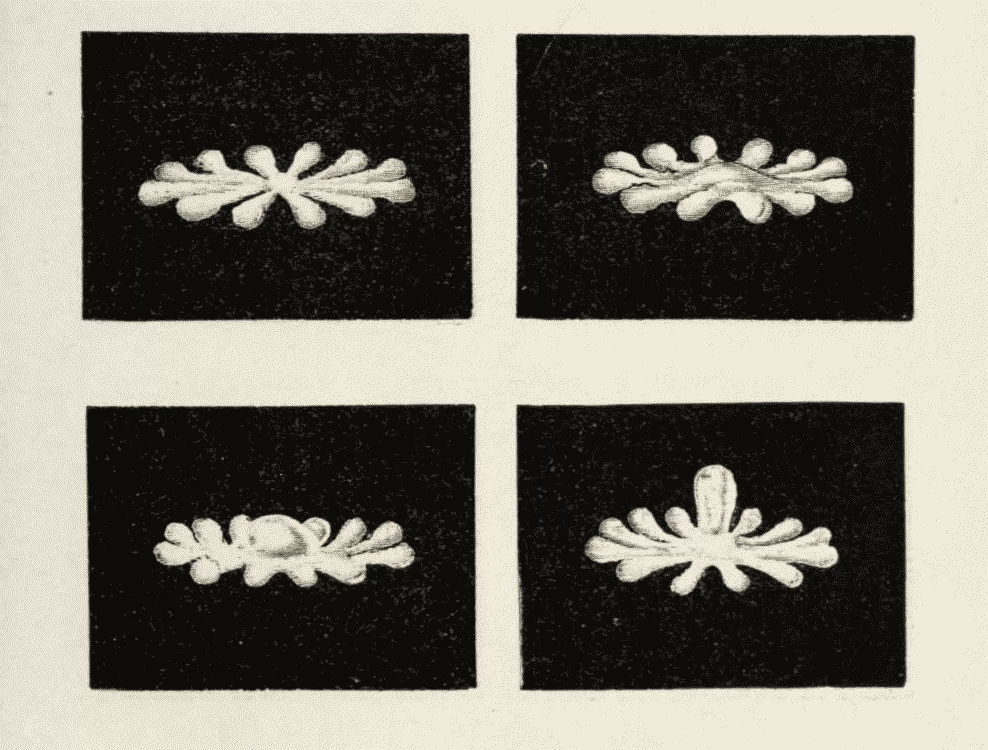
I recently finished Susanne Wedlich’s delightful book, Slime: A Natural History, from which I learned that in nature, slime—an abundant, if ill-defined, material—generally serves to mediate between extremes. “Slime,” Wedlich writes, “is a substance of interfaces.” Sea creatures that live in intertidal habitats, where they’re alternately buffeted by waves and exposed to the elements, depend on viscous excretions both to stay anchored in place and to weather the dry spells. Amphibians use their slimy coatings to split the difference between wet and dry habitats. The slimy coatings of our eyeballs and tongues protect the wet inner body from the harsh outside air. Slime softens boundaries of temperature, exposure, and salinity; it even brokers relationships between different biological domains. Our essential exchanges with bacteria, for example, always happen in the fertile zones of our mucus membranes.
The more I learn about biology, the more I appreciate its sliminess: the way seemingly-distinct boundaries, once examined, soften and melt. Take the notion of species—the basic boundary between one organism and the next. According to microbiologist Lynn Margulis, this isn’t a universal concept in nature, since bacteria swap genes so readily that the notion of a fixed species is untenable for them. Regardless of whether they make their home in deep ocean vents, in rock fissures miles beneath the Earth surface, or in the guts of ruminants and human beings, she writes, all bacteria form one “cosmopolitan” global species. Of course, there are differences and similarities; microbiologists tend to consider that if two bacteria share 85% of a genome, they constitute the same “strain,” but this is an approximate heuristic, and can change quickly, for example if the temperature varies even slightly.
The very concept of a species, Margulis believed, is reserved to the more parochial lifestyle of the eukaryotes. For people, plovers, and pandas alike, the boundaries between species are defined by mutual reproducibility—whether or not two individuals within a group can mate and produce a fertile union. And there’s a clear boundary, you’d think: the difference between fertility and barrenness, the living and nonliving. I often begin my talks by saying that “all computers are rocks,” as a way of pointing out how strange it is that we use lifeless matter to understand and even emulate biology. But even the boundary between rocks and life is slippery.
Our bones and teeth are minerals; the white cliffs of Dover, and indeed all limestone on Earth, is formed from the skeletons of ancient microbes. Biology and geology are coeval processes. The mineralogist Robert Hazen writes that “biochemical processes may be responsible, directly or indirectly, for most of Earth’s 4300 known mineral species.” To reiterate: some two-thirds of the minerals on Earth came into being as a direct or indirect consequence of the evolution of biological life. 2.3 billion years ago, when ancient photosynthetic microbes first began breaking apart water molecules, they released trapped oxygen, and this “Great Oxygenation Event” transformed the chemical composition of the planet’s oceans and atmosphere, leading to an explosion of new minerals, “irreversibly transform[ing] Earth’s surface mineralogy.”
Before the arrival of life on Earth, if minerals “evolved,” they did so through purely physical processes—in the accretion of cosmic dust, as a consequence of collisions with meteorites and other astronomical objects, and through the pressures of tectonic force. The emerging biosphere supercharged geological diversity. Bacteria and fungi pulverized and digested rocks, eroding them, exposing them to the atmosphere’s kiss. Living roots, too, wore down stone, forming clay minerals in the soil. By drawing carbon dioxide from the air, life maintained the presence of water on Earth, which carved our planet’s canyons, riverbanks, and seas. It’s at the shores of these ancient bodies of water—in the liminal zone between wet and dry—that the first creatures took their slithering steps onto land. They were, of course, coated in slime.

Speaking of slithering, slimy things: Quanta magazine just published a long-form piece from me about the unusual history of worm memory transfer experiments. Regular readers might remember my obsession, last summer, with this story. It starts in the late 1960s, with the iconoclastic behavioral psychologist James McConnell and his bizarre, highly-publicized experiments on planarian worms—simple, arrow-headed flatworms that have a simple brain with the same bilateral symmetry as ours.
McConnell trained his planarians using what were, at the time, fairly standard classical conditioning protocols, giving them electric shocks and exposing them to bright lights until they came to associate the two stimuli. Then he killed them, ground them up, and fed them to naive worms; in subsequent experiments, the “cannibal” worms retained the training, suggesting that they’d eaten the first worms’ memories.
It was eyebrow-raising stuff, made even more so by the fact that McConnell ran around calling himself “McCannibal” and self-published all his findings in a countercultural journal—a zine, really—called The Worm Runner’s Digest, alongside bonkers worm cartoons and spoof articles. All of this made him, briefly, very famous, then infamous, before his work was largely forgotten (by everyone, that is, except the Unabomber, who targeted him in the 1980s).
For the Quanta piece, I followed a group of researchers at Harvard as they attempted to reproduce McConnell’s experiments. They went to admirable lengths to do so, fishing wild worms from bodies of water across the country and tracking down McConnell’s now-nonagenarian lab assistants for training tips. It’s a continent-spanning, worm-running, intergenerational story about the sociology of science and the material basis of memory—a long-maligned idea returning to into scientific vogue.
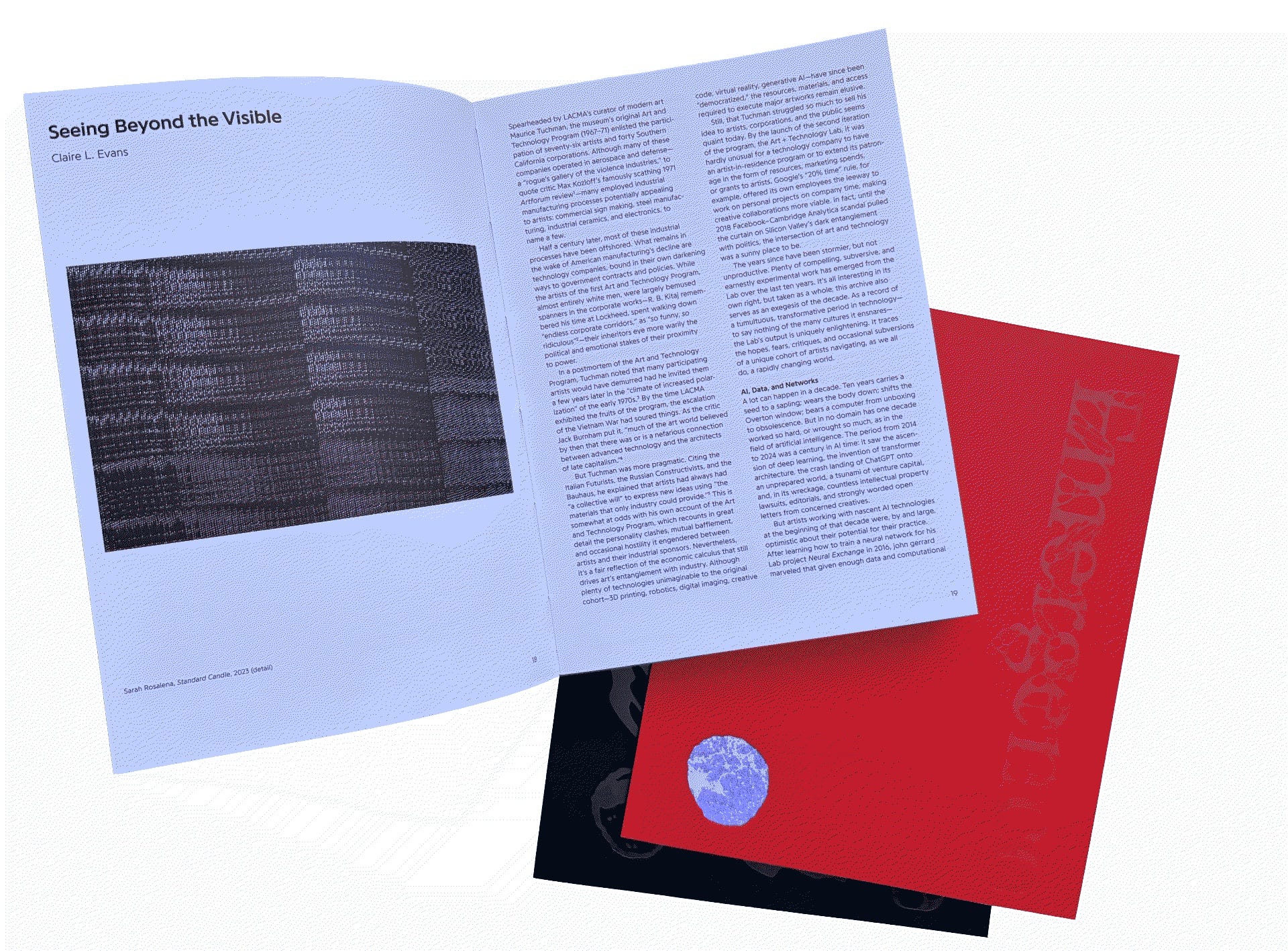
In further publication news, I was thrilled to contribute to All Impossible Deeds, a new catalogue celebrating the 10-year anniversary of LACMA’s Art + Technology Lab. My essay is an overview of LACMA’s storied position at “the intersection” of these disciplines, framing the museum’s current program in the context of its germinal Art & Technology Program, whose initial run from 1967-1971 paired an almost entirely white, male cohort of artists with partners in industry to produce new works.
Although the original program has long since earned mythological status, it was a disaster in its day, with over half of its commissions derailing due to personality clashes, mutual bafflement, and outright hostility between artists and their corporate sponsors. Some failures, however, were more philosophical; my favorite story is about the ill-fated collaboration between Robert Irwin, James Turrell, and NASA’s Jet Propulsion Laboratory. After years of ideation, Turrell walked away from the project in 1969—because he decided he actually didn’t need science to glimpse the sublime. “When we want to go into the universe, we can’t look at a rock,” he observed, derisively, in a program report. “We have to actually go to the moon. We’re so literal.”
All Impossible Deeds features project synopses and reflections on the second era of LACMA’s art and technology efforts (both more genial and, thankfully, more diverse than the first) from its curators and 50-odd commissioned artists, including Lauren Lee McCarthy, Taeyoon Choi, Agnieszka Kurant, and Kyle MacDonald.
Another recent print publication of note: the beautiful multi-part catalogue for Emergence, an ambitious 2024 synthetic biology exhibition produced by Fathomers, is finally available for purchase. I contributed a couple of essays, one about the ethics of working closely with biological subjects, and another about Dr. Marie Bannier Hélaouët’s project Crying Organoids. For the exhibition, Dr. Hélaouët, a cell biologist, created a series of tiny tear gland organoids—cellular-scale models of living lacrimal glands—that cried real tears throughout the opening. I wrote about the bittersweet enchantment of watching human cells weep under a microscope:
By isolating life from its context, we also irrevocably isolate ourselves. It may be satisfying to trace a boundary around complexity, to name it—but in the case of organoids, that complexity is also something we have drawn out from within ourselves. In order to see what force animates our cells, we’re stuck standing outside them, looking in like lonely giants gazing into a dollhouse we can never inhabit. No matter how detailed, the dollhouse world of the organoid will always be beyod our grasp. The real action is somewhere else—between, within, on the scale of cells and molecules, bound up in the unseen patterns that yoke life to itself, defying entropy…we can never be wholly of the magic that illuminates us.
I’ll have a lot more to say on this subject soon—my next big feature, which WIRED will publish in August, is all about brain organoids—so watch this space.
I recently spent two weeks in Point Reyes Station at the wondrous Mesa Refuge writers’ residency. PSA to friends and colleagues who write about nature, climate, social justice, and related themes: applications for 2027 residencies are now open. I highly recommend the experience. A dedicated writing shed on the edge of a restored wetland echoing with the hoots of shorebirds! I kept my door open, rain or shine, hoping to let the world in. One afternoon a fox placed his paw on my front step?!
After a long period of working from home, I’m solidly in my residency era, hungry for new landscapes and more intentional writing time. I just got word of my acceptance to UCross. I’m so excited to spend August in the foothills of the Bighorn Mountains, chipping away at a long-gestating book project that I hope to share more about soon.
A few things I’ve really enjoyed recently:
N. Katherine Hayles’ From Bacteria to AI, a dense but scintillating analysis of meaning-making and intelligence across cognitive substrates. As always with Hayles’ work, a large percentage soars right over my head, but I’m working my way through it with highlighter in hand, humbled by this octogenarian’s range.
The 2025 film Sirāt, which I’m kicking myself for having missed in theaters. An epic, minimalist, utterly brutal road movie starring a street-cast cohort of international ravers and burnouts, it cut me to the absolute bone. It lands somewhere between Sorcerer, Mad Max: Fury Road and Stalker. I’ve been listening to the soundtrack on repeat; it might be the best writing music of all time.
This wonderful Village Voice piece from 2000, by Paul LaFarge, about the fleeting supremacy and now total obsolescence of the artificial language Volapük (hat tip to Ed Park for surfacing this gem in his newsletter, The Dizzies). I first discovered LaFarge’s work in the MacDowell Library two summers ago; if you like Jorge Luis Borges, Dark City, and The Arcades Project, I highly recommend his debut novel The Artist of the Missing. Also on the invented-languages beat, Katie Thornton’s recent piece on Esperanto in Harper’s was delightful.
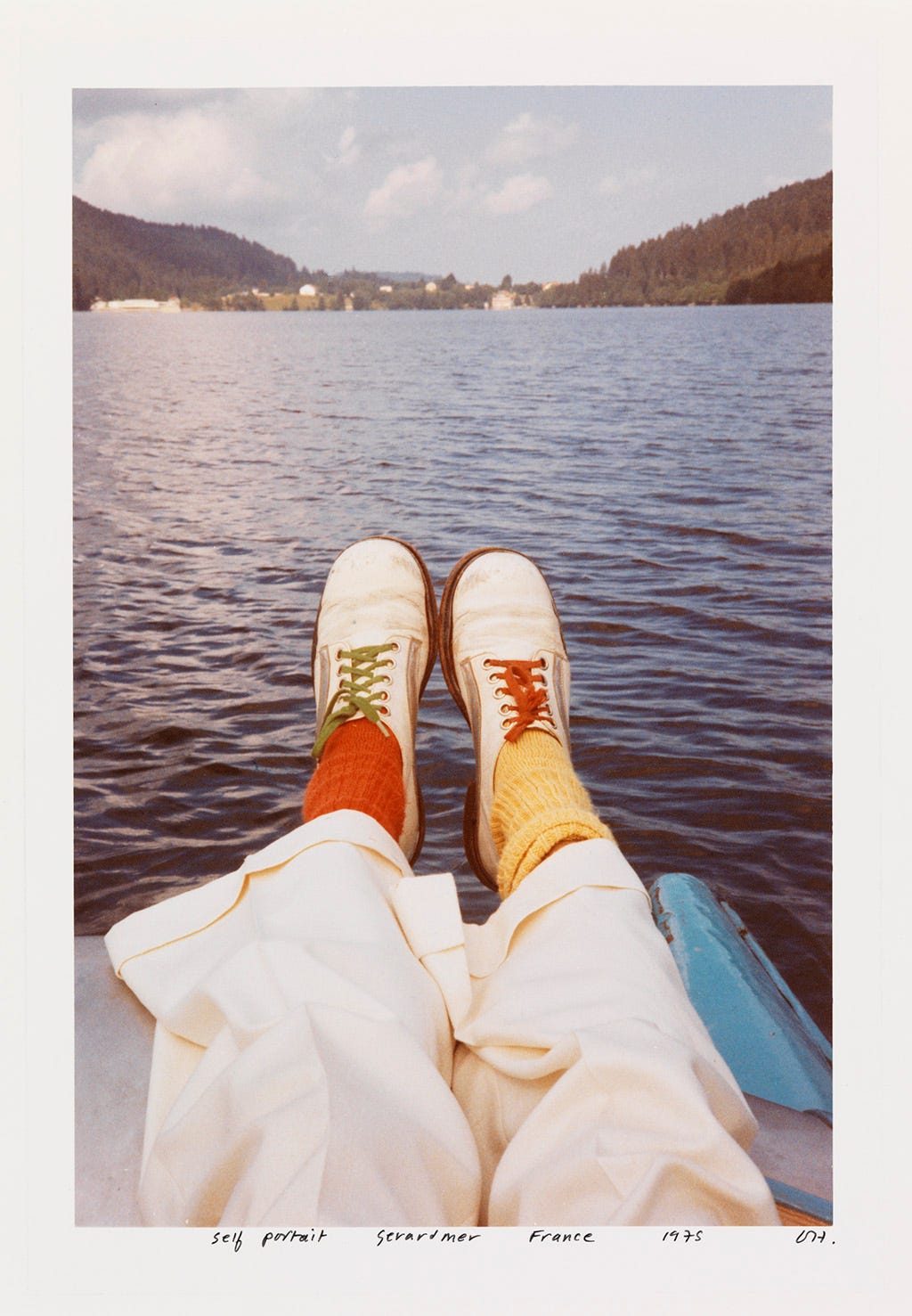
Finally, some style inspiration from the late David Hockney, who I hope brought his iPad to the astral plane so he can keep chasing the good light:
xo
Claire
This is so lovely!! McCannibal's experiments reminded me of this experiment by a 10 year old with some pet caterpillars. He trained them and wanted to see if their memories survived the turning-to-goo of their chrysalis transformation. https://timesofindia.indiatimes.com/science/did-the-butterflies-remember-him-japanese-students-discovery-uncovers-astonishing-insect-memory/articleshow/132304921.cms
Beautiful slime post. THE PEOPLE CRAVE MORE SLIME POSTS!